Despite extensive efforts to develop better photocatalysts, yet little effort has been made to study the long-term performance of these materials. The application of these materials hinges on their being mechanically or chemically stable within their intended environment. In fact, the long-term assessment of the activity of these materials is crucial for their marketability.
A two-fold approach was employed for the Micro WatTS project which involved a 12-week laboratory ageing exercise followed by a one-year-long experiment using specially built solar ageing units manufactured by Econetique and installed at MCAST and Università di Catania.
The laboratory-based tests served to select the most suitable material on the basis of photocatalytic performance and stability. All photocatalytic materials produced by UM and CNR were aged at MCAST and exposed to the same conditions. The materials were exposed to flowing synthetic greywater and illuminated by an artificial light source which was representative of sunlight. The best performing material was up-scaled for use in the prototype and final greywater treatment units.
To understand the long-term performance, these materials were then assessed using the solar ageing facilities manufactured by Econetique. The unit installed in Malta contains the photocatalytic materials produced by the UM and that in Sicily the materials synthesised by CNR. This test allowed to study the effect of seasonal variations on the materials.
Samples of the materials were extracted at different time intervals and their morphology and ability to degrade chemicals and bacteria assessed. These tests confirmed that the activity of the best performing materials selected in the short-term laboratory tests remained relatively high even after long-term ageing.
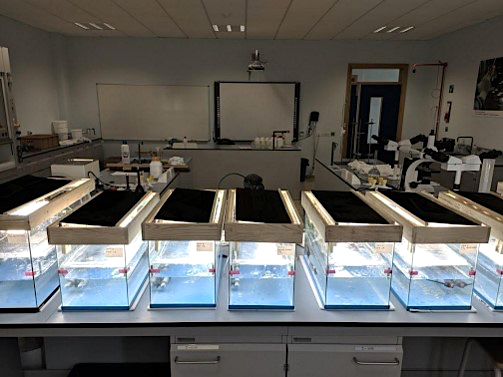
Lab-based test beds at MCAST
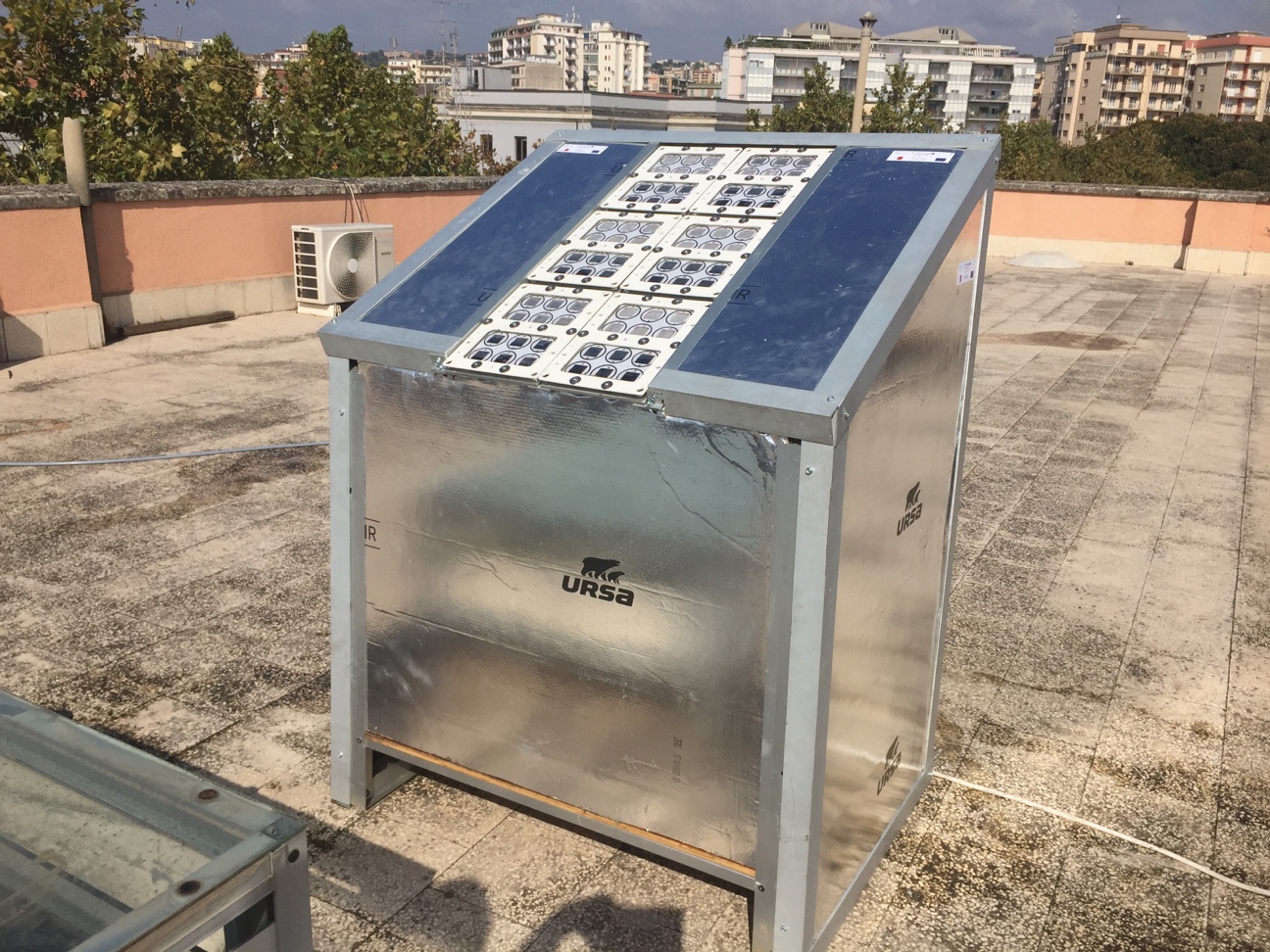
Ageing units at the University of Catania (UniCT)